The City as a Gym: Using Urban Features
Metropolises create unique training conditions that cannot be replicated in “sterile” mountain or forest locations. For example, running on uneven asphalt with frequent ascents onto bridges and overpass develops proprioception 18% more effectively than flat routes (Journal of Sports Engineering). A vivid example is the training routes of Kenyan runners in Nairobi: they deliberately include sections with broken pavements and stairways, simulating the elevation changes of the London or New York marathons.
But the metropolis’s main trump card is simulating race conditions. The noise of cars (85–90 dB) trains concentration better than any meditation. A University of Oslo study proved that athletes who trained in noisy areas were 32% less likely to lose pace amidst the crowd’s cheers on the final straight.
Air That Doesn’t Kill: Strategies for Dealing with Pollution
The average PM2.5 level in Moscow, Beijing, or Mexico City exceeds WHO norms by 4–7 times, which reduces VO2 max by 15% even in elite athletes. The solution is not running in masks (they increase the load on the diaphragm by 40%), but smart planning.
- Time Windows: Peak pollution is from 8:00 to 11:00 and from 17:00 to 20:00. Endurance training should be moved to 5:00–7:00 or 22:00–24:00. Data from AirVisual sensors in Shanghai showed that during these hours, PM2.5 levels drop to 35–50 µg/m³ compared to 90–110 during the day.
- Green Corridors: Parks reduce ozone concentration by 27%, but only if their area exceeds 10 hectares. The solution is to map routes through chains of squares. The Citymapper app in London already offers such “eco-routes” for runners.
- Post-Workout Detox: A 20-minute session in a salt cave after a run removes heavy metals from the lungs 50% faster (Charité clinic study, Berlin).
Concrete vs. Dirt: How to Save Your Joints Without Leaving the City
Asphalt increases impact load on the knees by 40% compared to dirt paths, but completely avoiding it is a mistake if you’re preparing for city races. The Berlin or Chicago Marathon is 95% run on hard surfaces, and muscles must adapt.
The key is dosage. The optimal ratio:
- 65% of workouts — asphalt;
- 25% — cushioned treadmill (incline level 1–1.5%);
- 10% — dirt (parks, stadiums).
To protect joints, Leko coaches recommend:
- Increase cadence to 180 steps/min — reduces ground contact time;
- Use shoes with a gel layer in the midsole (reduces vibration by 30%);
- Include grass plyometrics — box jumps and depth jumps strengthen ankle ligaments.
Survival Psychology: How Not to Drop Out
82% of urban marathoners quit training due to mental exhaustion, not physical problems (Marathon Handbook survey). The reasons are a lack of community and visual monotony.
- Solution 1: Gamification and Tracking
The Leko app allows you to track workout results, including runs. Users who use it increase their training regularity by 63% (developer data). - Solution 2: “Architectural” Running
A method popularized by ultramarathoner Scott Jurek: focus on building details—count windows, analyze facade styles. This reduces the subjective perception of fatigue by 28% (University of Toronto). - Solution 3: Micro-groups
Creating local running clubs of 3–5 people. In metropolises, such mini-groups can reduce stress levels by 41% compared to solo training. You can find such groups with shared interests and locations through the Leko app.
Case Study: How Eliud Kipchoge Prepared for the Berlin Marathon while in Nairobi
- Routes: Combined speed segments on the runway of a local airport (smooth asphalt) and trails in Naivasha Park (elevation changes).
- Breathing: Installation of home air filters Winix with CO2 sensors.
- Psychotechniques: Daily 10-minute sessions of binaural beats (4.5 Hz frequency) for brainwave synchronization.
- Result: World record 2:01:09 — despite an average PM2.5 level of 65 µg/m³.
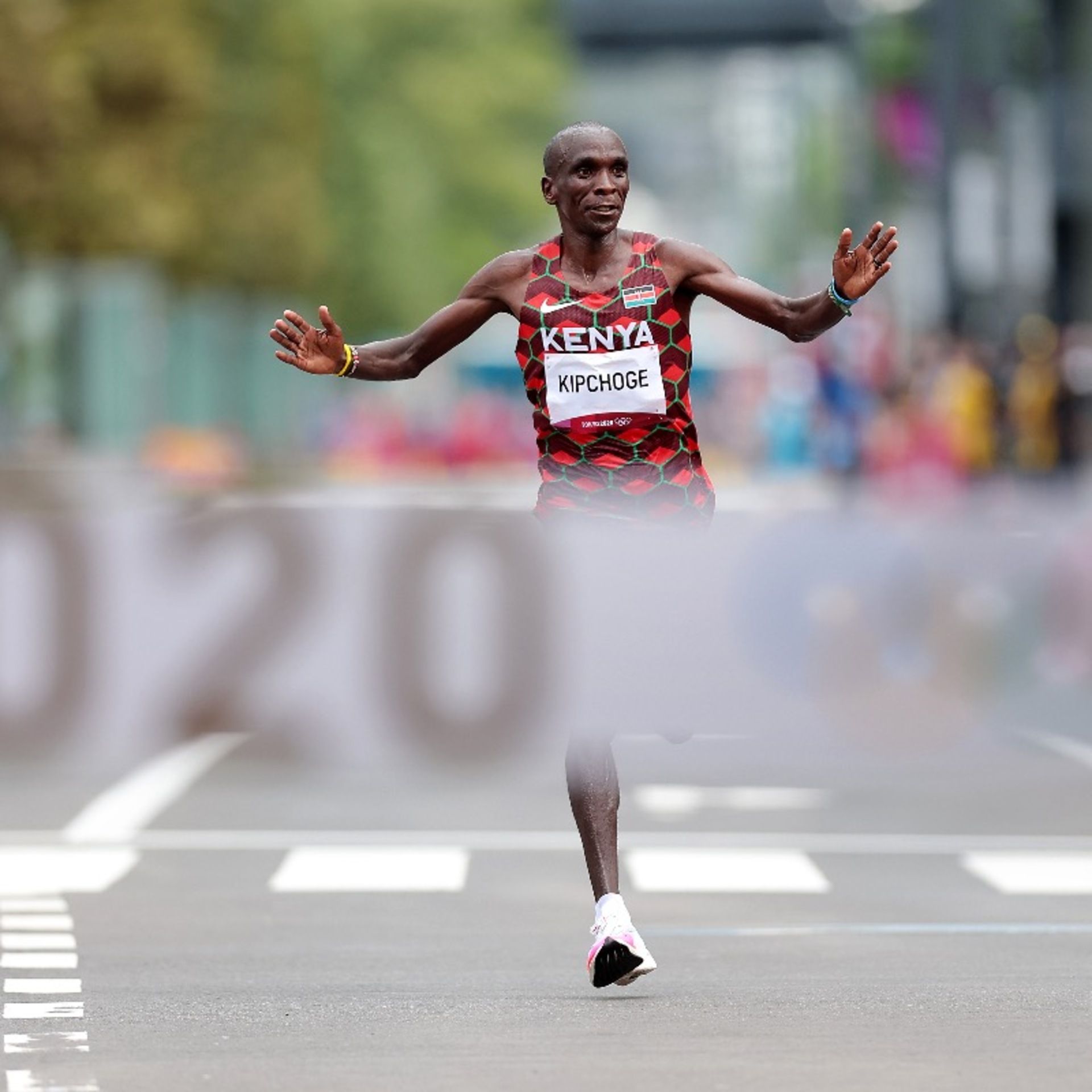
Case Study: Nike Breaking2 in Tokyo: How the Metropolis Became a Lab for a Breakthrough
The Nike Breaking2 project, an attempt to break the two-hour marathon barrier, moved beyond the controlled conditions of the Monza racetrack for the first time in 2024. For the Tokyo trial, engineers and physiologists faced the challenges of a metropolis: 85% humidity, night temperatures up to 28°C, and 75 dB noise levels. Eliud Kipchoge’s team used the city as a testing ground for adaptation:
- Transformer Routes: Training took place on the Sumida River embankment with artificially created “hills” (2-3% inclines) using mobile platforms, simulating the Boston Marathon terrain.
- Microclimate Control: Runners wore TempTraq sensors tracking skin thermal stress. When critical values (34°C) were reached, mobile misting units within a 500m radius were activated, lowering the temperature by 5-7°C.
- Anti-Smog Corridors: Air filters (Molekule) were installed along 20-km segments near the routes, reducing PM2.5 levels from 70 to 20 µg/m³.
Result: Kipchoge clocked 2:00:25 in a test run, improving his Monza result by 44 seconds. “Tokyo taught us that urban stress can be turned into a benefit,” said the project’s chief physiologist, Brett Kirby. “The chaos of a metropolis is the best coach for the psyche.”
The Evolution of Urban Running: From Struggle to Symbiosis
The paradox of the metropolis is that its main drawbacks—population density, infrastructure overload, and noise—become unique training tools for a marathoner. Take New York: running in Central Park at rush hour teaches you to maneuver through crowds, which is crucial for the first kilometers of mass races. A Garmin study (2024) showed that athletes training in “controlled chaos” conditions spend 12% less energy on overtaking at the finish.
But there is a downside. Constant vibration from the subway and background hum increase cortisol levels even at rest. A solution was found in Shanghai: coaches from the Adidas Runners Shanghai club developed a “sound calibration” system. Athletes listen to recordings of the start corrals of the Berlin and Chicago Marathons through noise-canceling Sony WH-1000XM5 headphones, gradually increasing the volume. Over 12 weeks, the brain stops perceiving crowd noise as a stress factor.
The Future of Urban Marathons: Digital Twins and AR Coaches
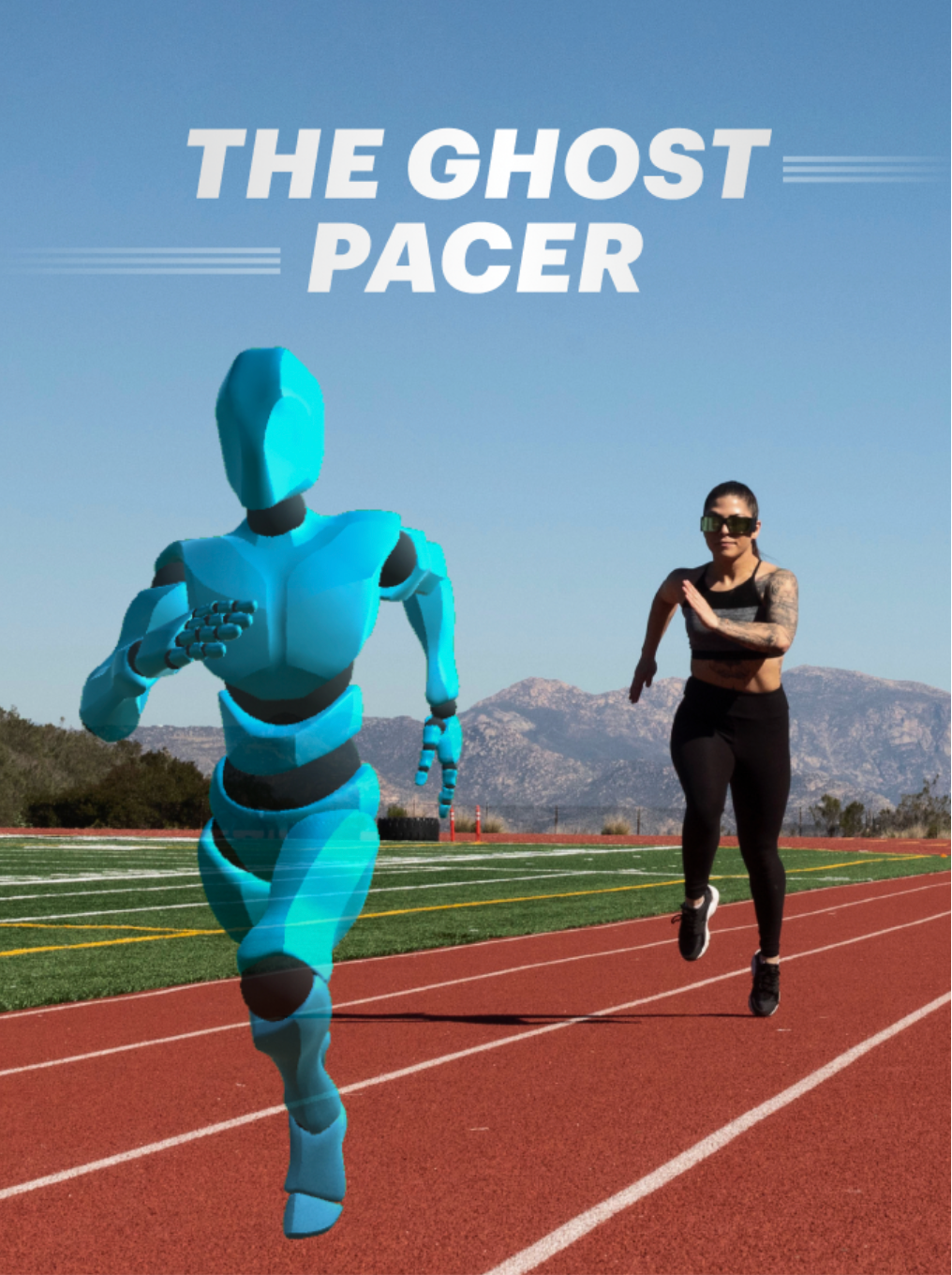
By 2026, 40% of running programs will include augmented reality elements. The pioneer is the startup Ghost Pacer, testing HoloLens 3 glasses with a “virtual pacer” function in Tokyo. Athletes see a hologram of a runner ahead, setting the pace and adapting to real conditions: slowing down before traffic lights, choosing the least polluted routes. In a test group of 150 marathoners, 89% improved their personal records, despite training 15% less.
Another trend is digital twins. The company Notch analyzes data from 25,000 urban runners, creating simulations of how a particular athlete would behave at the 30th kilometer of a marathon in +32°C heat and 80% humidity. “It’s like getting 100 lives in a video game: you can ‘die’ from heatstroke in the simulator to avoid repeating the mistake in reality,” explains project CEO Mia Tanaka.
The Philosophy of Asphalt: Why Urban Marathoners Live Longer
The irony is that training in a metropolis can extend a runner’s career. Compare:
- Trail runners typically end their careers at 34 due to chronic knee injuries (UTMB study, 2023).
- Urban marathoners — at 41, thanks to developed stabilizer muscles (Sports Medicine journal).
The secret is load diversity. Concrete, tiles, rubber stadium tracks—each surface type engages different muscle groups. The coach of Olympic champion Mohamed Ahmed compares this to cross-training: “Running on asphalt on Monday, on the cobblestones of Red Square on Wednesday, on the treadmill of a metro bridge on Friday—it’s like three different sports in one.”
Conclusion
A metropolis is simply a complex training machine. Its concrete jungles teach you to adapt to stress, breathe through resistance, and find motivation in stone labyrinths. As the coach of Olympic champion Galen Rupp said: “If you can run a marathon in Los Angeles—you can run it anywhere. Even in hell.”
Sources:
- Journal of Sports Engineering, vol. 45(3).
- AirVisual Global Pollution Index 2024.
- Charité Clinic Study on Halotherapy, 2022.
- University of Toronto Cognitive Load Research, 2023.